EP.3 – 睡眠是你的情緒安全帶【完】
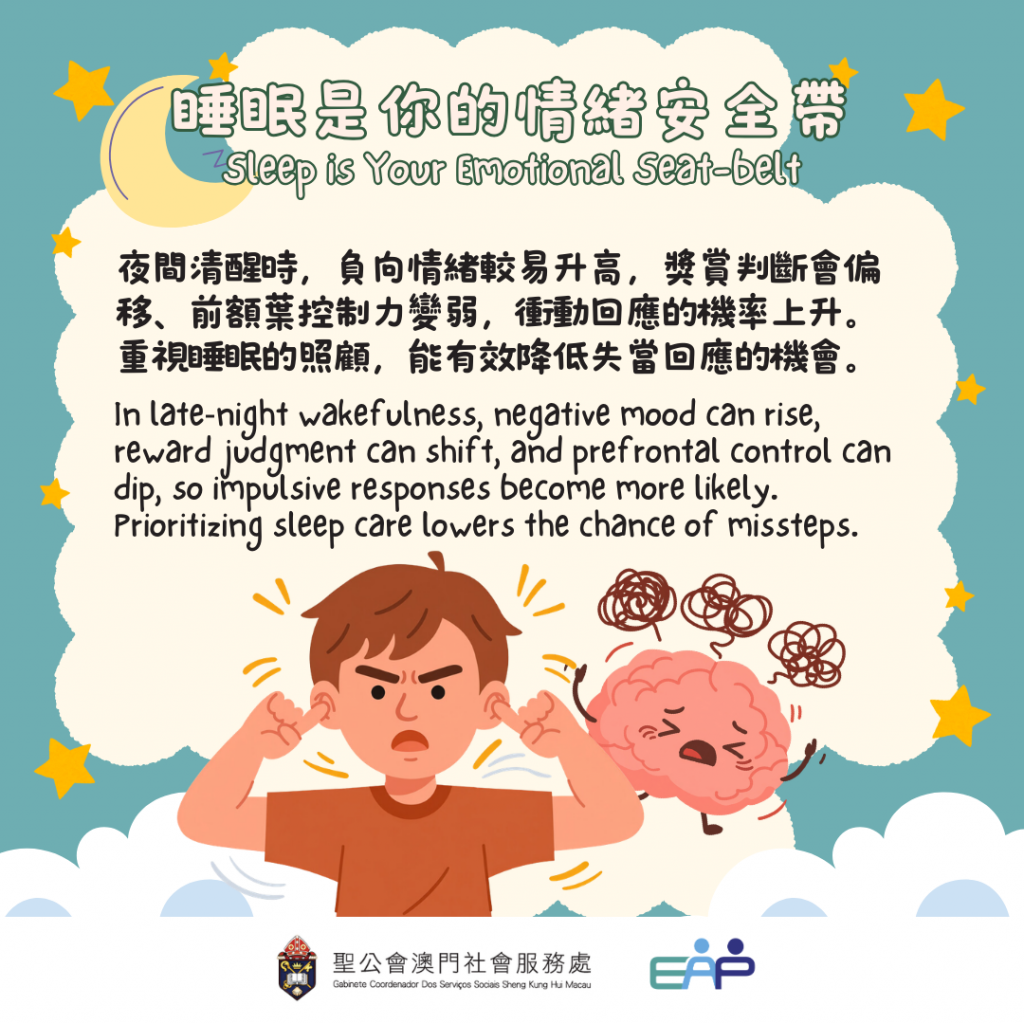
 夜間清醒時,負向情緒較易升高、獎賞判斷會偏移、前額葉控制力變弱,衝動回應的機率上升,有研究顯示夜間約 2–3 a.m. 風險較高。重視睡眠的照顧,能有效降低失當回應的機會、保護你與團隊。
簡單可行的睡眠照顧
 先微休息 2–3 分鐘:離開螢幕、腹式呼吸、補水或伸展;若可行,短暫小睡後,再回到議題。
若情緒不穩持續影響睡眠、食慾或專注,請及早與信任同事/主管談談,並考慮 EAP 或專業支援。
 當你在半夜感到情緒升高時,你最常用的「暫停工具」是什麼?(例如呼吸、短睡或走動喝水)
————————————————-
EP.3 – Sleep is Your Emotional Seat-belt【END】
In late‑night wakefulness, negative mood can rise, reward judgment can shift, and prefrontal control can dip, so impulsive responses become more likely. Several studies also note a higher‑risk window around 2–3 a.m. Prioritizing sleep care lowers the chance of missteps and protects you and your team.
Simple and usable sleep care
Take a 2–3 minutes pause: step away from the screen, practice slow breathing, hydrate or stretch; if possible, have a brief nap, then return to the issue.
If mood changes continue to affect your sleep, appetite, or focus, speak with a trusted colleague/manager and consider EAP or professional support.
When emotions spike at night, which single “pause tool” helps you most? (breathing, brief nap, or a short walk with water)
EP.2 – 用睡眠來安排工作
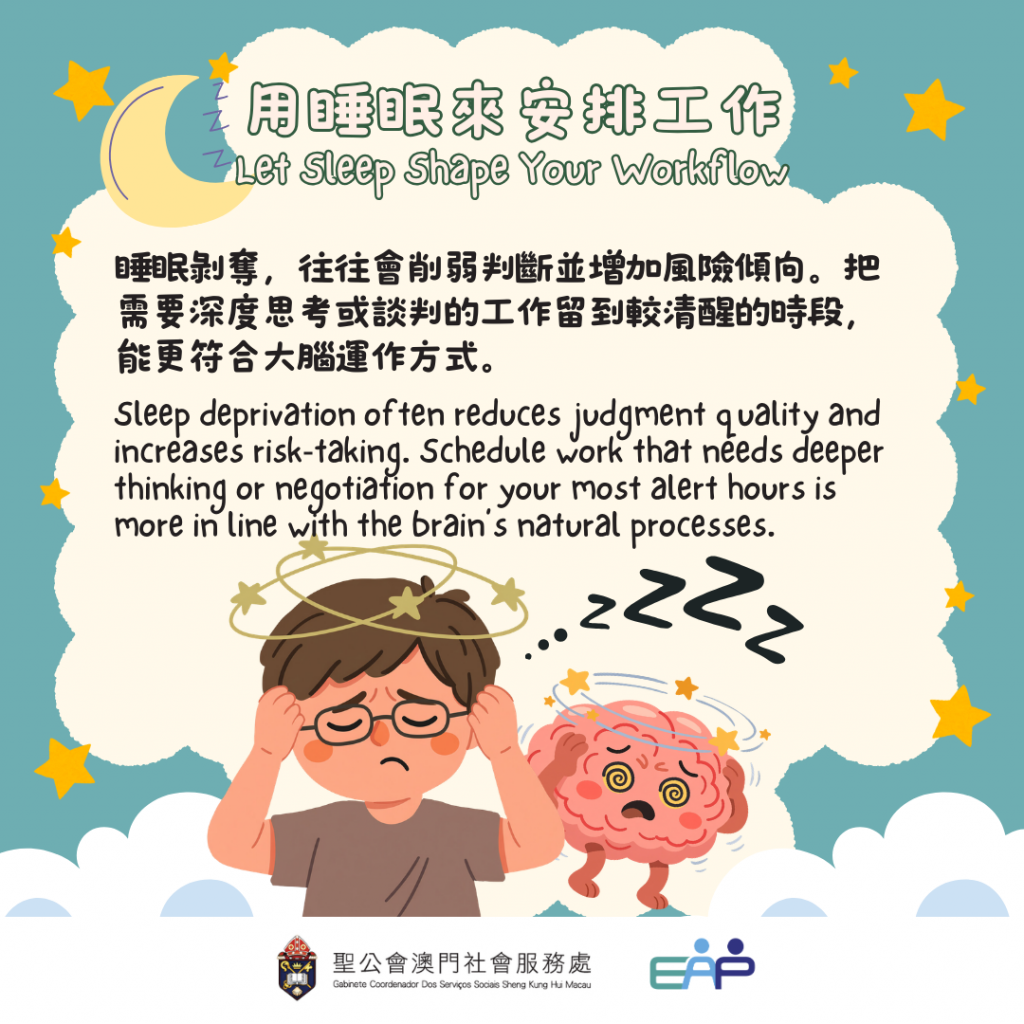
有研究指出,部分或完全的睡眠剝奪,往往會削弱判斷並增加風險傾向。對夜班/輪更團隊,夜間以例行、低風險任務為主。因此,把需要深度思考或談判的工作留到較清醒的時段,能更符合大腦運作方式。
實務建議
可安排整理、排程、紀錄、草擬稿件等工作於夜更進行;而重大決策的談判、簽核、預算與人事等事務可安排在睡醒後處理。
在團隊行事曆標註睡眠保護時段與最佳決策時段,減少跨時段訊息干擾。
你會嘗試把哪一項夜間任務移到白天,以換來更完整的睡眠與更好的判斷?
————————————————-
EP.2 – Let Sleep Shape Your Workflow
Evidence shows that partial or total sleep deprivation often reduces judgment quality and increases risk‑taking. For night or rotating shifts, reserve nights for routine, lower‑risk tasks. Schedule work that needs deeper thinking or negotiation for your most alert hours.
Practical tips
During night shifts, focus on filing, scheduling, logging, and drafting; save negotiations, sign‑offs, budgets, and HR matters for after you’ve slept.
Mark protected sleep windows and best‑decision hours on shared calendars to reduce off‑hour messages and interruptions.
Which night‑shift task will you move to daytime to protect sleep and decision quality?

EP.1 – 先睡好,再決定
💤 半夜清醒時(特別是凌晨 2–3 點),大腦會處於「想睡、不是想工作」的生理狀態,情緒較易偏負面、抑制力也較弱,做決定容易失準。充足睡眠可讓隔天的情緒與判斷回到較穩定的狀態。
為什麼跟工作有關?
🤔 研究指出,睡眠不足常見地削弱決策能力,並增加「偏冒險」的選擇;把高風險或高情緒的決策移到白天,往往更穩當。
輪更友善的做法
🍀 建立 60–90 分鐘的睡前減光習慣(降低藍光/亮光),幫助入睡。
🍀 夜班後先來 90–120 分鐘的「核心補眠」,之後再補足,提升恢復效率。
👉 你會把哪一類決策改為「睡後再處理」?(例如合約、預算或衝突回覆)
————————————————-
EP.1 – Rest Well, Decide Better
💤 When we’re awake at night—especially around 2–3 a.m.—the brain is geared for sleep, not complex work. Mood can skew negative and self‑control is lower, so decisions are easier to get wrong. Sufficient sleep helps reset emotions and supports clearer judgment the next day.
Why this matters at work
🤔 Research links sleep loss with weaker decision‑making and a tendency toward riskier choices. Shifting high‑stakes or emotionally charged decisions to daytime is usually safer and more balanced.
Shift‑friendly ideas
🍀 Create a 60–90 minute wind‑down before sleep (dim lights, reduce blue light) to ease sleep onset.
🍀 After a night shift, take a 90–120 minute “anchor nap,” then finish the remainder of your sleep later to improve recovery.
👉 Which type of decision will you handle only after sleeping? (e.g., contracts, budgets, conflict replies)