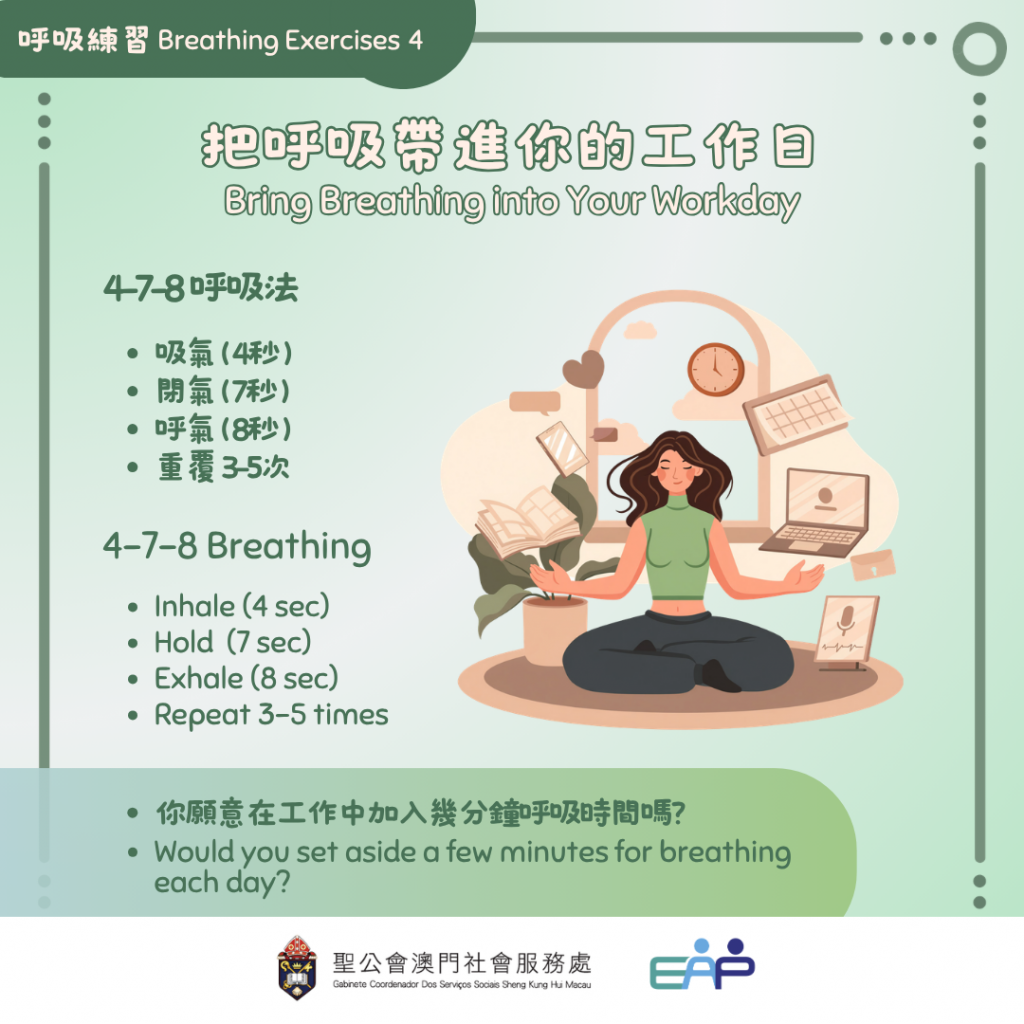
【呼吸練習  |把呼吸帶進你的工作日】
 呼吸不只是應對壓力的工具,也可以成為日常習慣。
在輪更工作中,簡單的呼吸練習有助放鬆身體、穩定情緒,甚至改善休息與入睡狀態。
研究指出,呼吸練習容易執行,適合在職場中推廣,有助減少壓力與提升專注。
小技巧|4-7-8 呼吸法
 吸氣(4秒):透過鼻子慢慢吸氣4秒
閉氣(7秒):輕輕屏住呼吸,維持放鬆
呼氣(8秒):慢慢呼出氣體,讓身體放鬆
 適合下班後或準備休息前使用
 你願意在工作中加入幾分鐘呼吸時間嗎?
———————————————–
【Breathing Exercises | Bring Breathing into Your Workday】
Breathing is not only for stressful moments—it can become part of your daily routine.
For shift workers, even short breathing practices can support emotional balance, relaxation, and rest.
Research shows that breathing exercises are simple, accessible, and effective for reducing workplace stress.
Tip|4-7-8 Breathing
Inhale (4 sec): slowly breathe in through the nose
Hold (7 sec): gently pause
Exhale (8 sec): slowly release the air
Best used before rest or after work
Would you set aside a few minutes for breathing each day?
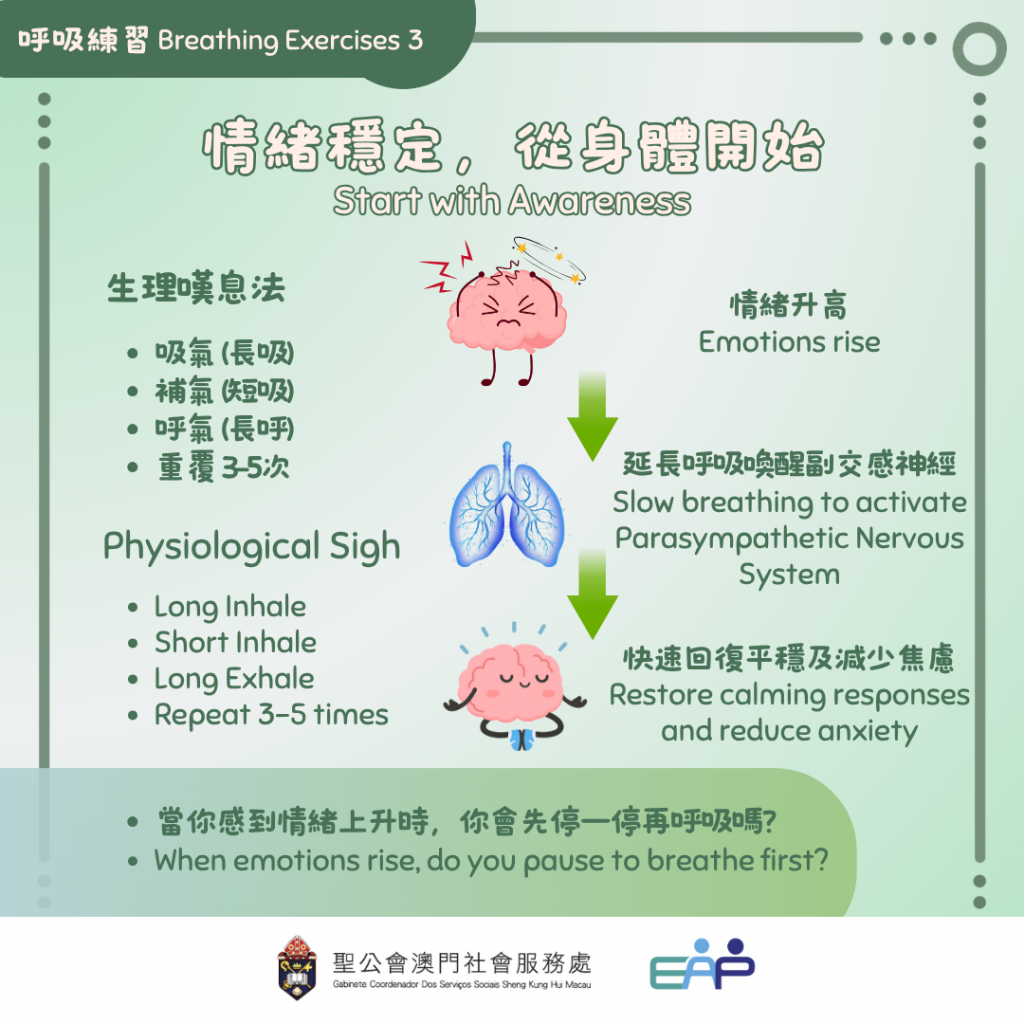
【呼吸練習  |情緒穩定,從身體開始】
當情緒升高時,身體會先反應(如呼吸變快、心跳加速),令我們更容易衝動或失去耐性。
研究顯示,特定呼吸模式(特別是延長呼氣)可以刺激副交感神經,幫助身體快速回復平穩,減少焦慮。
調整呼吸,是讓情緒「慢下來」的第一步
小技巧|生理嘆息(Physiological Sigh)
吸氣(長吸):透過鼻子深深吸一口氣,讓肺部擴張
補氣(短吸):再輕輕吸一小口氣,把肺部填滿
呼氣(長呼):慢慢完全呼氣,讓身體放鬆
可重複 3–5 次
特別適合在壓力或情緒升高時使用
當你感到情緒上升時,你會先停一停再呼吸嗎?
———————————————–
【Breathing Exercises | Regulate Emotions from the Body】
When emotions rise, the body reacts first—breathing speeds up and tension builds. This can lead to impulsive reactions.
Research shows that breathing patterns with longer exhalation can activate calming responses and reduce anxiety.
Slowing your breath helps slow your emotions
Tip|Physiological Sigh
Inhale (long): take a deep breath in through your nose
Inhale (short): add a second small inhale
Exhale (long): slowly release all the air
Repeat 3–5 times
When emotions rise, do you pause to breathe first?
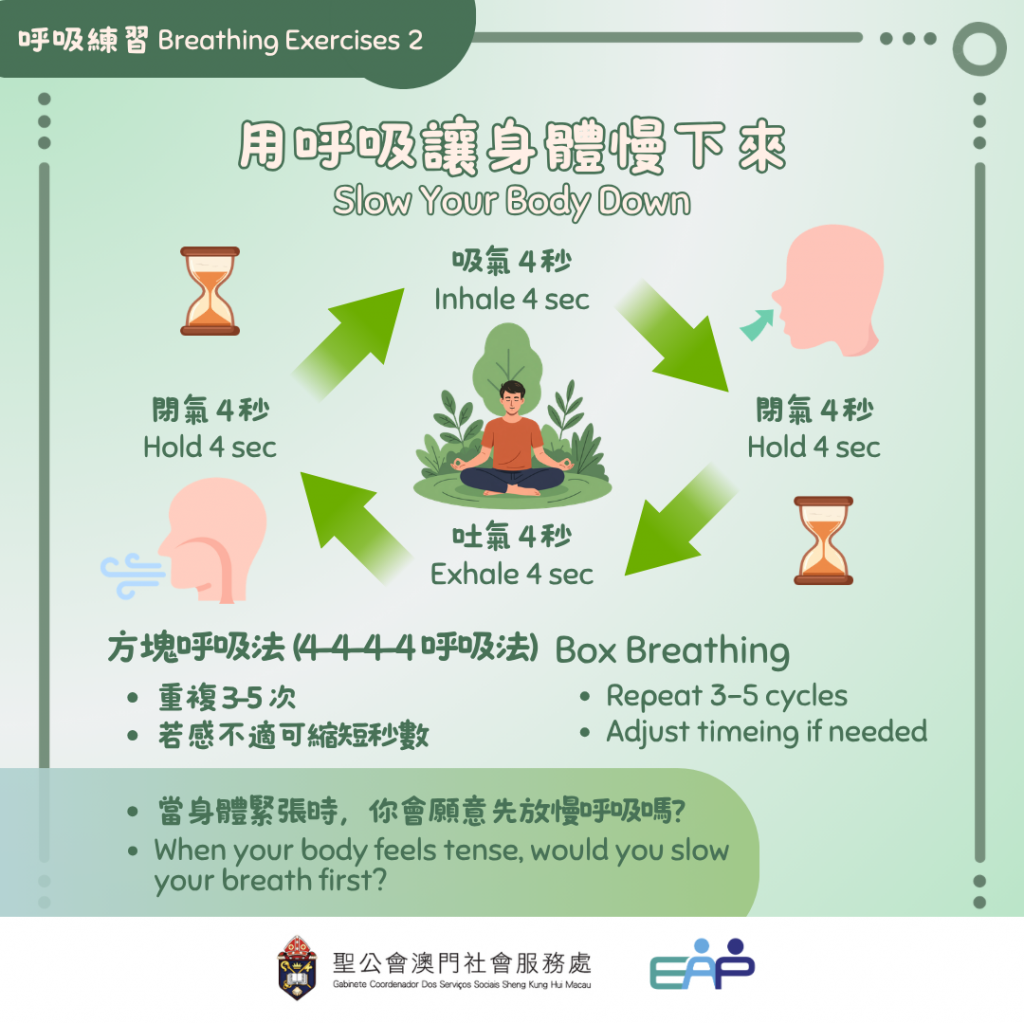
【呼吸練習  |用呼吸讓身體慢下來】
當長時間處於壓力下,身體會持續處於「警覺狀態」。這不但影響情緒,也會影響專注與判斷。
慢而有節奏的呼吸,可以啟動副交感神經,幫助身體回到放鬆與穩定的狀態。
換句話說:慢呼吸 = 主動降壓
小技巧|方塊呼吸(4-4-4-4)
吸氣(4秒):閉上雙眼,透過鼻子緩慢吸氣4秒,感受空氣流入肺部
閉氣(4秒):屏住呼吸4秒,保持身體放鬆
吐氣(4秒):慢慢呼出4秒,讓空氣完全排出
閉氣(4秒):呼完氣後,再停4秒
重複 3–5 次
若感不適,可縮短秒數或只做吸氣+呼氣
當身體緊張時,你會願意先放慢呼吸嗎?
———————————————–
【Breathing Exercises | Slow Your Body Down】
Under ongoing stress, the body remains in a constant alert state, affecting mood, focus, and decision-making.
Slow, rhythmic breathing helps activate the parasympathetic system and restore calm.
Slow breathing = active calming
Tip|Box Breathing (4-4-4-4)
Inhale (4 sec): close your eyes and breathe in slowly through your nose
Hold (4 sec): pause gently without tension
Exhale (4 sec): slowly release the air
Hold (4 sec): pause again before the next inhale
Repeat 3–5 cycles
Adjust timing if needed
When your body feels tense, would you slow your breath first?
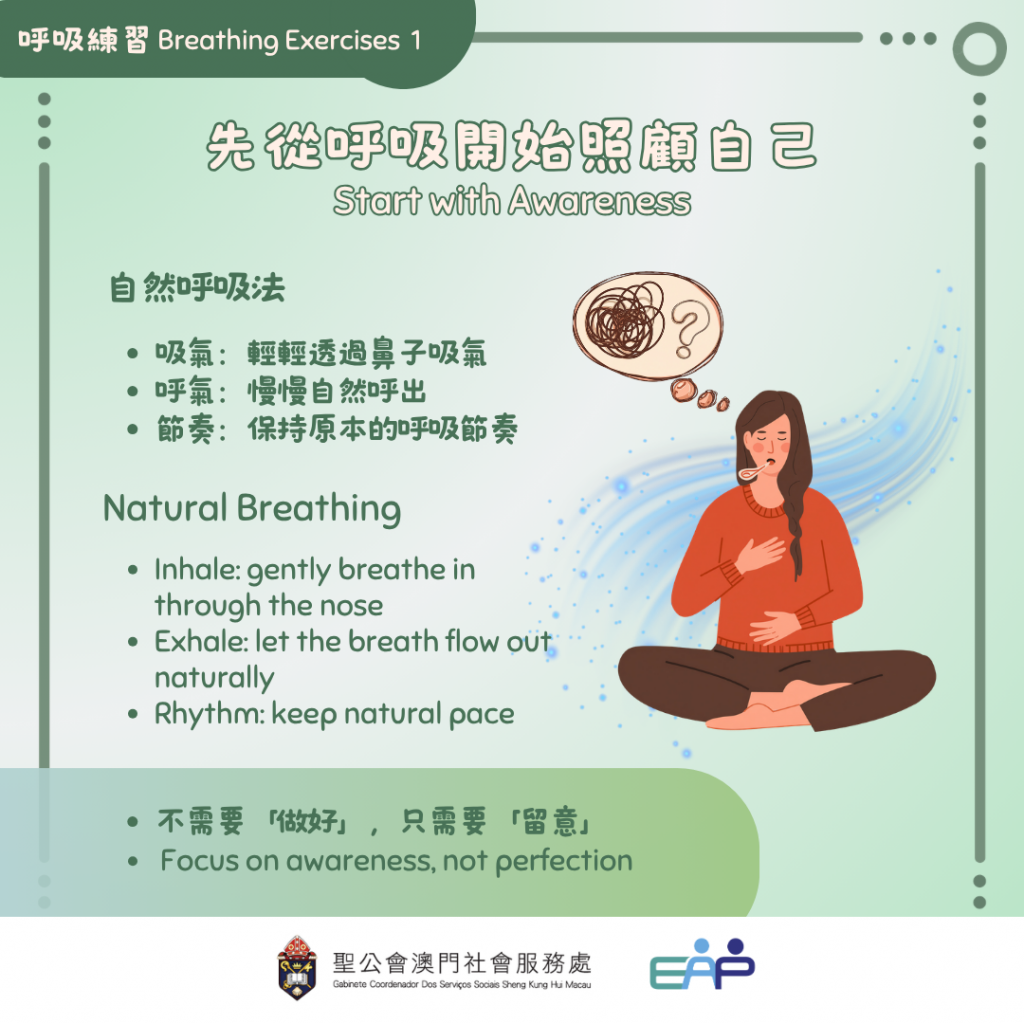
【呼吸練習  |先從呼吸開始照顧自己】
在忙碌與輪更工作中,我們很少留意自己的呼吸。當壓力增加時,呼吸往往會變得急促而淺,令身體持續處於緊張狀態。
研究指出,單純地覺察呼吸,已經可以幫助身體減少壓力反應,讓情緒慢慢穩定下來。
呼吸,是最容易開始的自我照顧方式
小技巧|自然呼吸法(基礎練習)
吸氣:輕輕透過鼻子吸氣,感受空氣進入身體,不需要刻意加深
呼氣:慢慢自然呼出,不需用力
節奏:保持原本的呼吸節奏,只專注於感覺
重點:不需要「做好」,只需要「留意」
今天,你有注意過自己的呼吸嗎?
———————————————–
【Breathing Exercises | Start with Awareness】
In busy and shift-based work, we rarely notice our breathing. When stress builds, it often becomes fast and shallow, keeping the body in a tense state.
Research shows that simply paying attention to breathing can help regulate stress and support emotional balance.
Your breath is the most accessible self-care tool
Tip|Natural Breathing
Inhale: gently breathe in through the nose, without forcing depth
Exhale: let the breath flow out naturally
Rhythm: keep your natural pace, just observe
Focus on awareness, not perfection
Have you noticed your breathing today?